cmtfoi.org

Author name: official

Uncategorized

If there is a rare disease, there should be a patient registry.

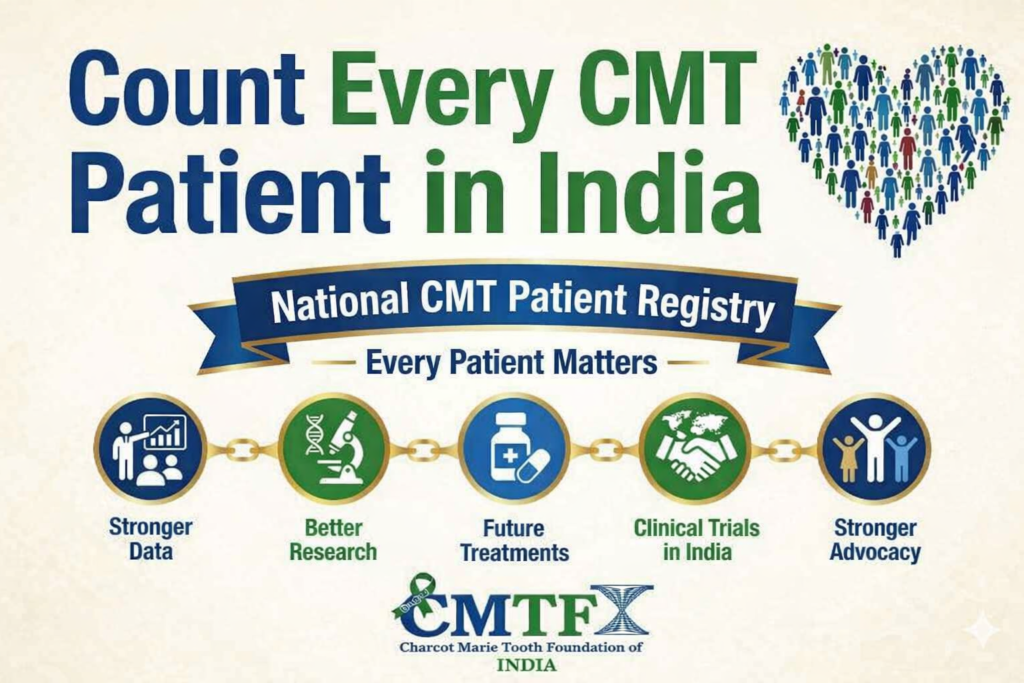
If there is a rare disease, there should be a patient registry.   When a rare disease is identified, the immediate focus is often on finding a treatment. Yet, one of the most important questions remains unanswered: Do we truly understand the disease? Before therapies, before clinical trials, and before biomarkers, comes the Data. And the most powerful way to systematically collect that data is through a patient registry. For clinicians, geneticists, and researchers, a patient registry is much more than a database. It is a scientific foundation that supports answers to critical questions, such as: How many patients & families are affected with this disease? Where are they located? What could be the origin or root-cause? What genetic variants are involved? How does the disease progress over time? Why do some patients progress faster than others? Which clinical outcomes matter most to patients and families? Patient registries make it possible to conduct natural history studies, which are essential for understanding how a disease evolves in the absence of treatment. Without this knowledge, it becomes difficult to measure whether a new therapy is truly effective. Registries also help researchers move from observation to discovery. They enable the identification of disease patterns, support biomarker development, reveal genotype-phenotype correlations, and help uncover the underlying molecular mechanisms driving disease progression. For industry and clinical trial sponsors, registries are often the first step in assessing trial readiness. They provide insights into patient numbers, geographic distribution, disease severity, and potential recruitment pathways. Many successful rare disease trials around the world were built upon years of registry data. Beyond research, registries have another important role: they bring visibility to conditions that are often misunderstood. By generating reliable evidence, they help dispel myths, reduce stigma, strengthen advocacy efforts, and support evidence-based policy making. In many ways, a patient registry serves as a roadmap: It helps identify immediate needs such as proper diagnosis and access to care. It informs intermediate goals such as biomarker development and therapeutic research. It supports the ultimate goal of disease-modifying treatments and, one day, a cure. As physicians, geneticists, researchers, patient organizations, and policymakers work together to advance rare disease research, one principle remains universally relevant: You cannot effectively study, manage, or treat what you do not systematically understand. And that understanding begins with a patient registry. If there is a rare disease, there should be a patient registry, because: No registry → limited understanding. Limited understanding → limited research. Limited research → limited therapeutic progress. This is precisely why the National CMT Patient Registry was established in India—to create a foundation for natural history studies, biomarker discovery, clinical trial readiness, and future therapeutic development for Charcot-Marie-Tooth disease. Registry: https://cmtfoi.org/patient-registry/ #RareDiseases #PatientRegistry #CharcotMarieTooth #CMTFoundationOfIndia

Uncategorized

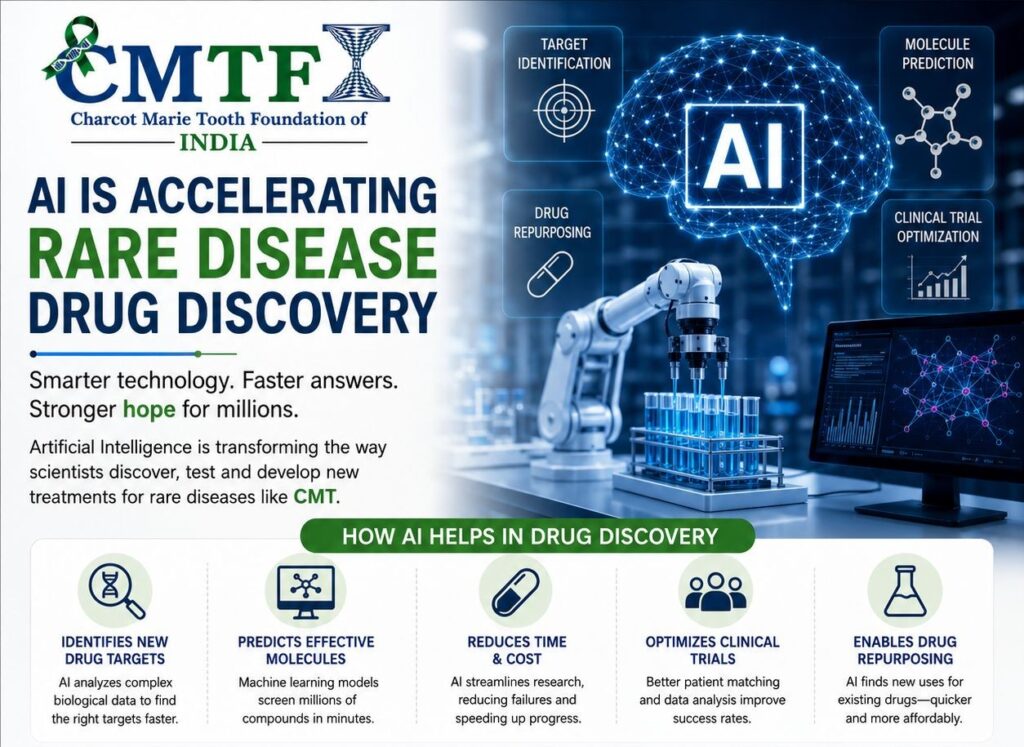
Artificial Intelligence and the Future of Rare Disease Drug Discovery in CMT

Artificial Intelligence (AI) is rapidly transforming the future of healthcare and biomedical innovation, especially in the field of rare diseases such as Charcot-Marie-Tooth (CMT) disease. Researchers, biotechnology companies, and scientific institutions across the world are increasingly using AI-powered tools to better understand disease biology, accelerate drug discovery, improve clinical research, and support the development of future therapies. Rare genetic disorders like CMT present unique scientific challenges due to their complex genetics, variable disease progression, and limited availability of large patient datasets. AI-driven technologies are helping address these challenges by enabling faster analysis of biological, clinical, genetic, and movement-related data. These advances are opening new possibilities in precision medicine, disease modeling, biomarker identification, patient monitoring, and therapeutic discovery. One emerging innovation in this field is the DANCER, an AI-assisted movement analysis tool developed by Dr. Wolfgang Pernice and the CMT Research Foundation in collaboration with Columbia University. DANCER is designed to analyze motor function and movement patterns in individuals affected by CMT using simple 2D smartphone video recordings. Through advanced computer vision and AI-based reconstruction methods, the platform can generate highly detailed 3D whole-body movement models, helping researchers better quantify gait, balance, and functional changes over time. Such approaches may improve disease tracking and support future clinical research methodologies. AI is also increasingly influencing the future of rare disease drug discovery. Platforms such as VoyageR, developed by ReviR Therapeutics, are exploring AI-enabled approaches for identifying RNA-targeted small-molecule therapies for neurological and genetic disorders, including potential applications related to CMT disease. By combining machine learning, RNA biology, molecular modeling, and structural analysis, these computational systems can rapidly evaluate large chemical libraries and identify molecules with potential therapeutic relevance. Such approaches may help reduce the time and cost traditionally associated with early-stage drug development. In addition to movement analysis and drug discovery, AI-assisted technologies are being explored globally for: Identification of new therapeutic targets Drug repurposing strategies Biomarker discovery and disease prediction Clinical trial optimization and patient stratification Genetic data interpretation and precision medicine approaches Large-scale patient data analysis through registries and digital health systems While artificial intelligence does not replace laboratory science, clinical expertise, or patient participation, it has the potential to significantly support and accelerate scientific discovery in rare neurological diseases. As the global CMT ecosystem continues to evolve, the integration of artificial intelligence, computational biology, patient registries, and collaborative research initiatives may contribute toward improved understanding of CMT disease and future therapeutic opportunities for affected individuals and families worldwide. Disclaimer This article is intended solely for educational and awareness purposes. References to DANCER, VoyageR, artificial intelligence platforms, research initiatives, organizations, or emerging technologies are based on publicly available information from their respective institutions and independent scientific sources. The Charcot Marie Tooth Foundation of India does not claim ownership of the technologies, platforms, trademarks, research projects, or associated intellectual property mentioned in this article unless explicitly stated. References to ongoing research or investigational approaches should not be interpreted as medical advice, endorsement, or guarantees of treatment outcomes.
Uncategorized

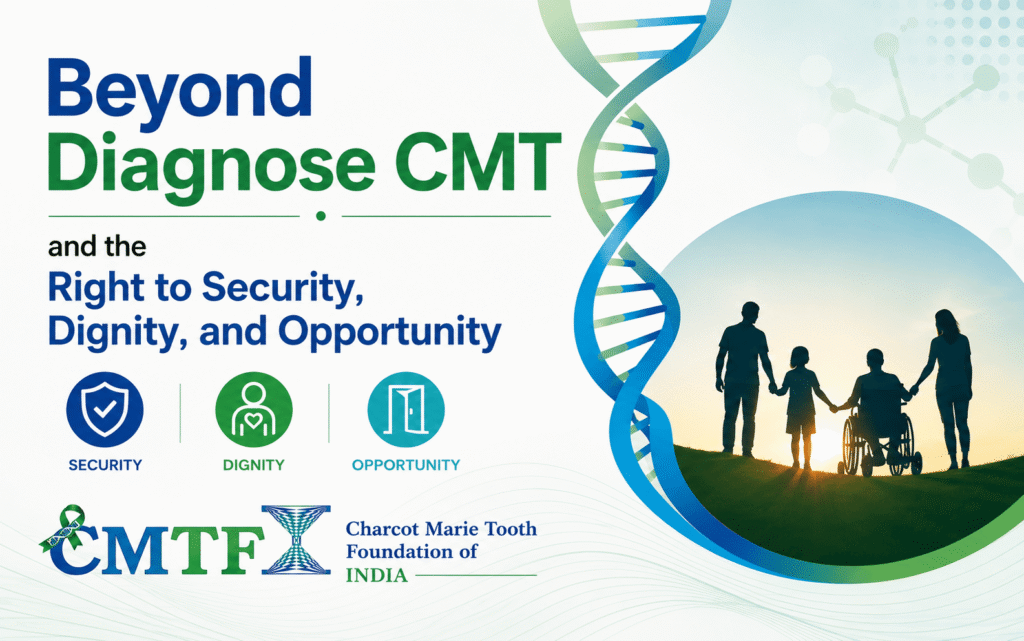
Beyond Diagnose CMT and the Right to Security, Dignity, and Opportunity

When people search for Charcot-Marie-Tooth disease (CMT), the quick result usually explains it as an inherited neurological disorder affecting the peripheral nerves that control movement and sensation in the arms and legs. While medically accurate, this definition does not fully reflect the daily realities faced by individuals living with CMT. The purpose of awareness is not only to describe the condition, but to encourage meaningful solutions to the many small and large obstacles that are, in fact, resolvable. One of the most urgent concerns is access to fair and inclusive health insurance. Many individuals with CMT are capable, educated, independent, and willing to pay insurance premiums, yet they often face rejection, exclusion, or limited coverage simply because they have a genetic condition. This creates a deep sense of insecurity about the future. People with CMT often work twice as hard to prove their abilities. A physical condition such as foot drop or an irregular gait does not define their competence, dedication, or intelligence. The real burden is not always the disability itself, but the uncertainty of what happens if medical support or financial protection is denied. There is an immediate need for experts, policymakers, insurers, and healthcare professionals who are empowered, effective, and sensitive to these realities. Awareness must move beyond sympathy toward action — building systems that offer dignity, confidence, and equal opportunity to those living with CMT and other inherited neurological conditions.

Uncategorized

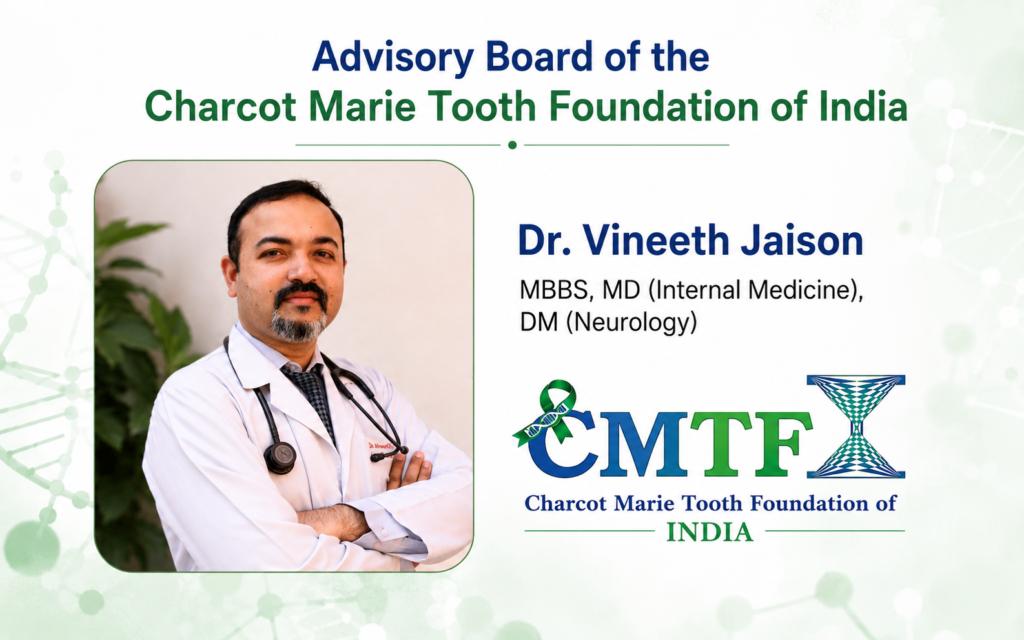
Welcoming Dr. Vineeth Jaison to Our Advisory Board

We are pleased to announce that Dr. Vineeth Jaison joined the Advisory Board of the Charcot Marie Tooth Foundation of India on 5 May 2026. His association with our CMT community marks an important step in strengthening our mission to support individuals and families affected by Charcot-Marie-Tooth (CMT) disease through greater awareness, medical guidance, advocacy, and access to reliable information. Dr. Vineeth Jaison is an accomplished neurologist with over 18 years of clinical experience and currently serves as Professor & Lead Consultant at the Neuromuscular Centre of Excellence and the Department of Neurology at Christian Medical College & Hospital, Ludhiana, Punjab—one of India’s leading tertiary care teaching hospitals. He completed his MBBS (2004), MD in Internal Medicine (2011), and DM in Neurology (2015) from Christian Medical College & Hospital, Ludhiana, under Baba Farid University of Health Sciences, Faridkot. His clinical expertise spans a wide range of neurological and neuromuscular disorders, particularly rare and hereditary conditions such as Charcot-Marie-Tooth disease (CMT), Muscular Dystrophy, Spinal Muscular Atrophy (SMA), Congenital Myasthenic Syndrome, ALS, CIDP/GBS, Parkinson’s Disease, Dystonia, Autoimmune Encephalitis, and Epilepsy. Dr. Jaison is also experienced in advanced neurological procedures including EMG, EEG, autonomic function testing, evoked potential studies, and botulinum toxin therapy. In addition, he oversees patient care in a dedicated 30-bedded Neuro ICU and inpatient neurology ward, reflecting his extensive experience in managing both routine and complex neurological conditions. Over the years, Dr. Jaison has received several academic and professional recognitions, including the Young Neurologist Award at WSC, Turkey (2014), 1st Prize at CARES, CMC Ludhiana (2015), and 1st Prize in the Critical Care Quiz at PIMS Jalandhar (2010). He is also a member of leading professional organisations, including the American Academy of Neurology, the American Academy of Neuromuscular and Electrodiagnostic Medicine, and the Indian Academy of Neurology. As a member of our Advisory Board, Dr. Jaison will play an important role in guiding our efforts to improve clinical awareness of CMT, promote accurate medical understanding, and support patients and caregivers with evidence-based neurological insights. We warmly welcome Dr. Vineeth Jaison to the Charcot Marie Tooth Foundation of India and look forward to working together toward creating meaningful impact for the CMT community across India.
Scroll to Top