Understanding Charcot-Marie-Tooth (CMT) Disease: A Guide by CMTFOI
Charcot-Marie-Tooth (CMT) disease is the most common inherited neurological disorder worldwide. It affects roughly 1 in 2,500 people. However, many people remain undiagnosed for years.
The Charcot Marie Tooth Foundation of India (CMTFOI) created this six-part guide to improve CMT awareness. It explains the early signs, causes, diagnosis, and management of CMT disease. It also highlights the support available to patients and families.
1. Early Warning Signs of CMT
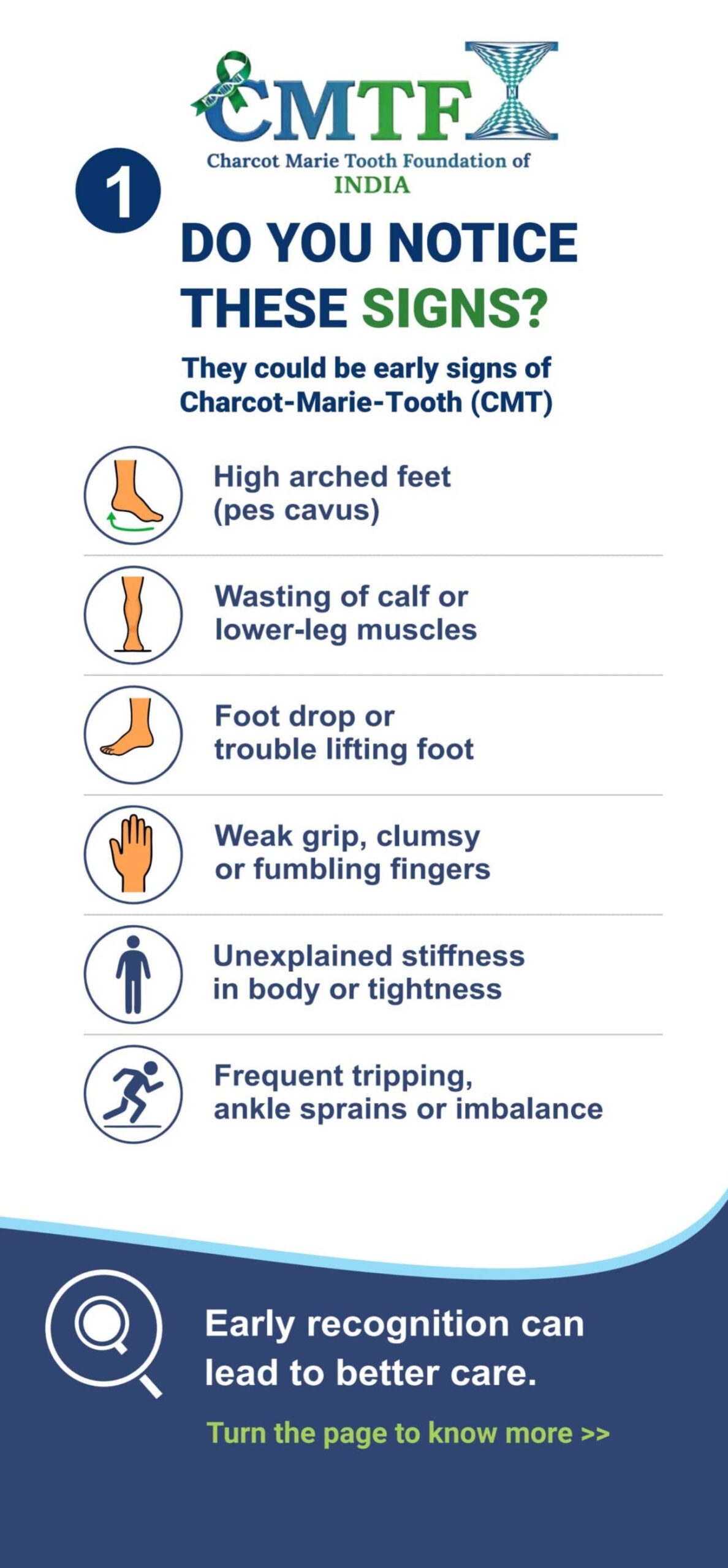
Some common early signs of CMT include:
- High-arched feet (pes cavus)
- Wasting of the calf or lower-leg muscles
- Foot drop or difficulty lifting the foot
- Weak grip or difficulty using the fingers
- Frequent tripping or ankle sprains
- Problems with balance or coordination
- Unexplained muscle stiffness or tightness
If you notice several of these symptoms, speak with a healthcare professional. Early assessment can help identify the cause and guide further testing.
2. What Is CMT and How Is It Inherited?
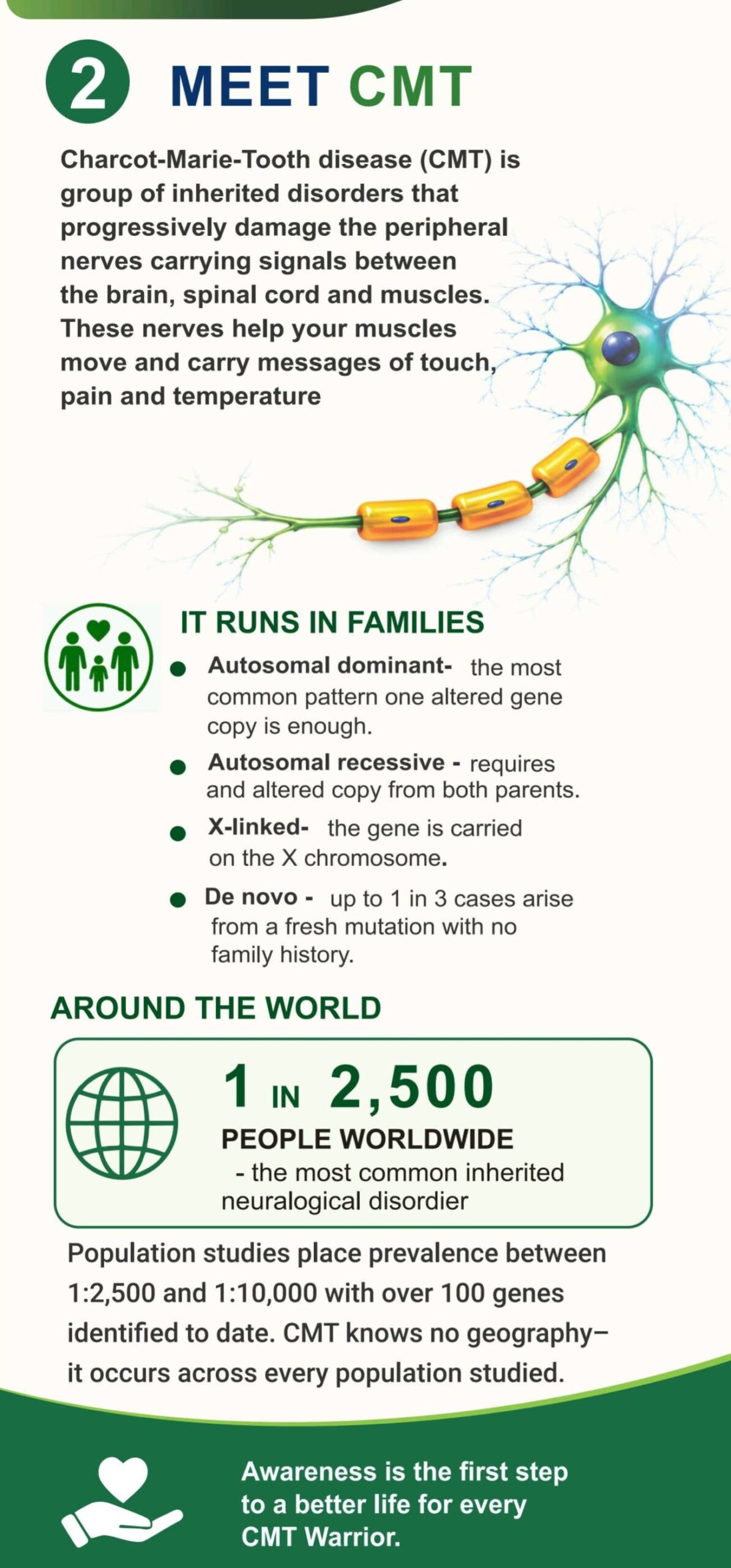
Charcot-Marie-Tooth disease refers to a group of inherited disorders. These conditions affect the peripheral nerves. Peripheral nerves connect the brain and spinal cord with muscles and other parts of the body.
These nerves help control muscle movement. They also carry signals for touch, pain, and temperature. As a result, nerve damage can cause weakness, reduced sensation, and problems with movement.
CMT can follow different inheritance patterns:
- Autosomal dominant: One altered copy of a gene can cause the condition.
- Autosomal recessive: A person usually inherits an altered gene copy from both parents.
- X-linked: The altered gene is located on the X chromosome.
- De novo: A genetic change can occur for the first time in a person. In such cases, there may be no previous family history.
Because CMT has many genetic causes, symptoms and inheritance patterns can vary between individuals.
3. Living with Charcot-Marie-Tooth Disease
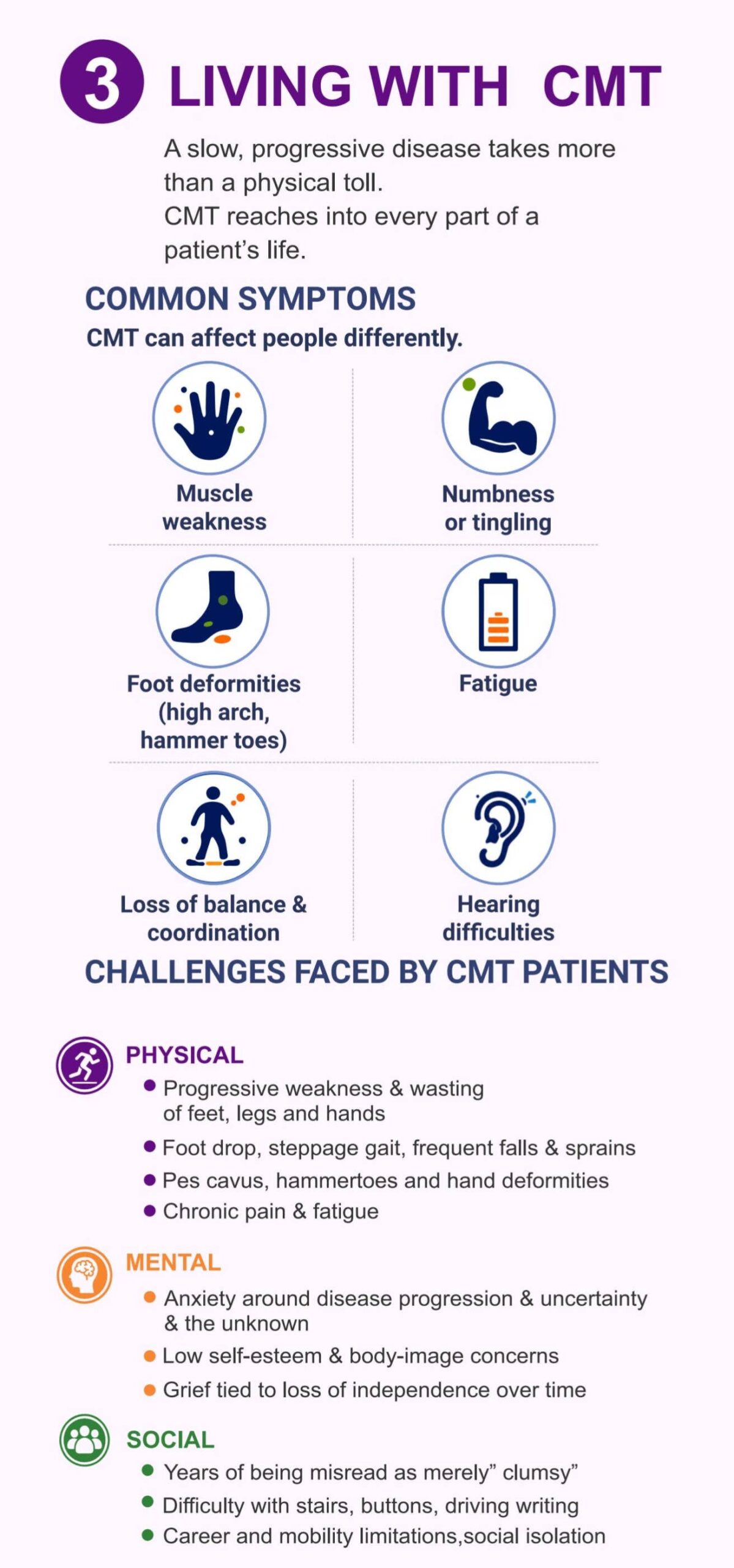
CMT can affect more than physical health. It may also influence emotional well-being and everyday life.
Physical Impact
People with CMT may experience:
- Progressive muscle weakness
- Balance problems
- Hammertoes and other foot deformities
- Fatigue
- Muscle or nerve pain
Emotional Impact
Living with a progressive condition can also affect mental well-being. Some people may experience anxiety about disease progression. Others may have concerns about body image or changes in independence.
Social Impact
CMT symptoms can sometimes appear as simple “clumsiness.” This can make the condition difficult for others to understand.
In addition, everyday activities may become challenging. Tasks such as writing, using buttons, walking, or climbing stairs may require extra effort. These challenges can sometimes lead to frustration or social isolation.
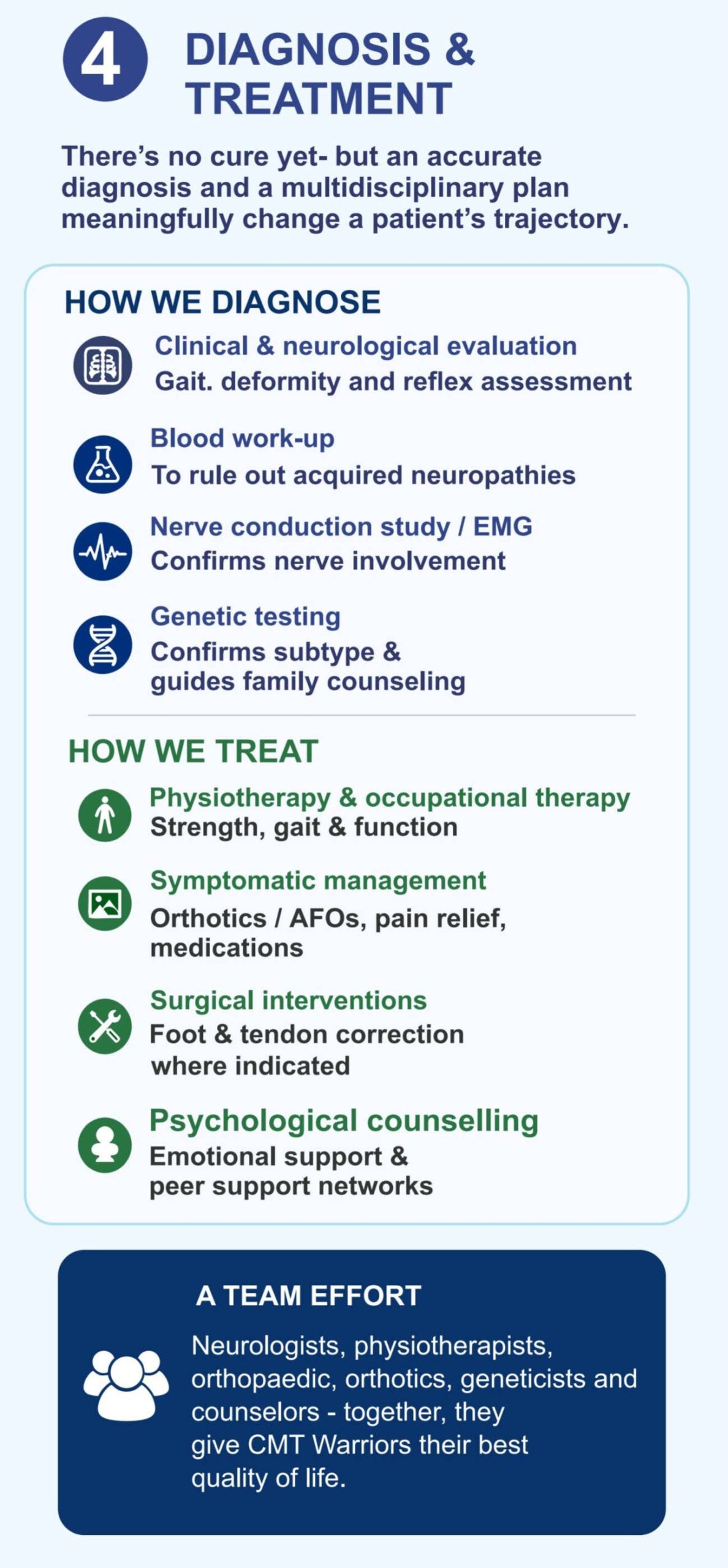
4. CMT Diagnosis and Management
There is currently no cure for CMT. However, appropriate management can help people maintain mobility and improve their quality of life.
Doctors may use several methods to diagnose CMT. These can include:
- Clinical and neurological evaluation: Doctors assess symptoms, muscle strength, reflexes, sensation, and coordination.
- Blood tests: These may help rule out other conditions or support the diagnostic process.
- Nerve conduction studies: These tests assess how quickly and effectively nerves transmit signals.
- Electromyography (EMG): This test evaluates electrical activity in muscles.
- Genetic testing: Genetic tests can help identify the specific cause of CMT.
Managing CMT
Treatment depends on a person’s symptoms and needs. A multidisciplinary approach can provide more comprehensive care.
Management may include:
- Physical therapy
- Occupational therapy
- Orthotic devices such as ankle-foot orthoses (AFOs)
- Pain management
- Mobility support
- Surgery when required
- Psychological counseling and emotional support
Regular follow-up can also help healthcare professionals monitor changes and adjust care over time.
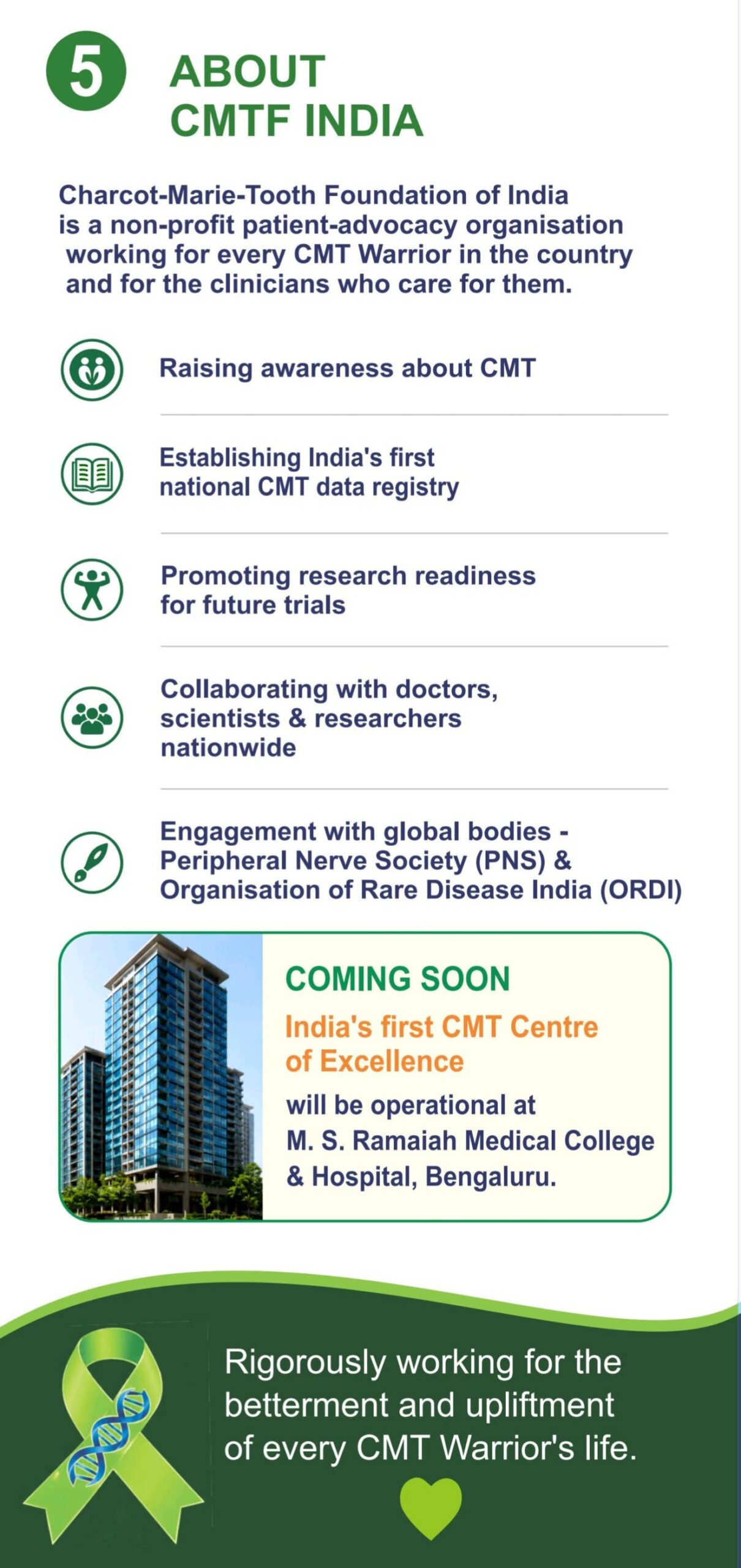
5. CMT Foundation of India Initiatives
The CMT Foundation of India works to improve awareness, support patients, and encourage CMT research across the country.
Our initiatives include:
- Raising awareness about CMT among patients, families, healthcare professionals, and the public.
- Building a National CMT Patient Data Registry in India.
- Supporting collaboration between Indian and international CMT researchers.
- Working with organisations such as the Peripheral Nerve Society (PNS) and ORDI.
- Supporting the development of India’s first CMT Centre of Excellence at M. S. Ramaiah Medical College & Hospital, Bengaluru.
Through these initiatives, we aim to strengthen India’s role in the global CMT community.
We also want to improve access to reliable information and support future research opportunities.
6. Get Connected with CMTFOI
If you or a loved one is living with CMT, you do not have to navigate the journey alone. The CMT Foundation of India works to connect patients and families with reliable information and support.
Contact CMT Foundation of India
- Email: Info@cmtfoi.org
- Phone: +91 99884 63039 / +91 83137 34020
- Headquarters: Panchkula, Haryan